
Regenerative design, AI-driven microclimate intelligence, biosolutions, and digital twin simulations are redefining how protected agriculture can operate, and PasiSera brings all these innovations into a single passive, climate‑stable system.

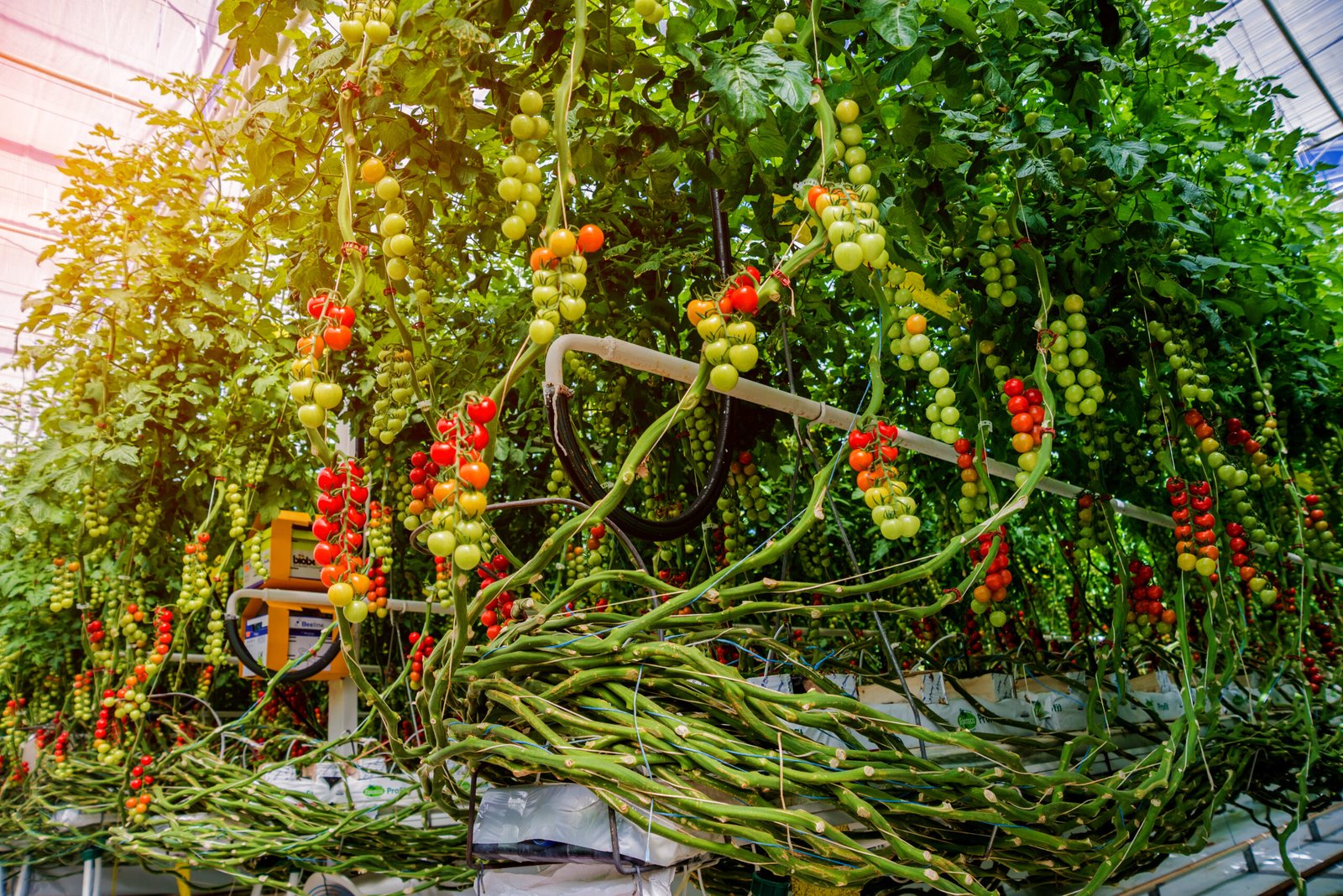
Modern agriculture relies less on intuition and more on data, integrated processes, and repeatable systems. While farms and greenhouses across Europe differ in climate, culture, and resources, the way they operate is becoming increasingly standardized.
A Common Language for Modern Agriculture: How Standardization Drives Performance in PasiSera Greenhouses
In practice, this “common language” means the same monitoring principles, the same data types, and the same performance benchmarks regardless of location. For producers, this eliminates confusion and reduces the variability that directly affects yield.
Within the PasiSera ecosystem, this translates into intelligent greenhouse solutions that enable unified control and understanding of every process: temperature, humidity, resource consumption, and crop development. All of these become comparable, trackable, and easy to optimize.
Standardization doesn’t mean rigidity. On the contrary, it creates the freedom to make better, faster, and more informed decisions. When everyone operates on the same type of information, collaboration becomes more efficient and results become more predictable.
For PasiSera, this “common language” means scalable agriculture: solutions that can be deployed across different farms while remaining consistent in performance and easy to integrate.
The future of agriculture won’t be defined by differences between systems but by their ability to communicate through data, technology, and clear processes.

The Rise of Passive Greenhouse Systems: Why the Future of Farming Is Predictable
For decades, farming has been defined by uncertainty. Weather patterns shift, energy costs spike, and even experienced growers are left making decisions based on incomplete information. The result is an industry that has long operated more like a gamble than a production process.
That is changing.
Our intelligence layer monitors conditions in real time and anticipates risks before they affect your crop, giving you full control without constant manual intervention.
By combining passive infrastructure with data-driven monitoring, we reduce energy consumption by up to 90% compared to conventional greenhouse systems.
The traditional greenhouse model relies on active systems , mechanical heating, cooling, and artificial lighting to control the growing environment. These systems are expensive to run, difficult to maintain, and highly sensitive to energy price fluctuations. When something goes wrong, the response is reactive: fix the problem after it has already affected the crop.
Passive greenhouse design takes the opposite approach. Instead of fighting the external climate, the structure is engineered to work with it. Orientation, insulation, thermal mass, and natural ventilation are used to maintain stable growing conditions without constant energy input. The result is a system that is inherently more resilient and significantly cheaper to operate.
Intelligence Makes the Difference
Passive infrastructure alone is not enough. To truly eliminate uncertainty, you need data.
This is where the predictive intelligence layer comes in. By continuously monitoring temperature, humidity, soil conditions, and energy consumption, the system builds a real-time picture of what is happening inside the greenhouse. More importantly, it anticipates what is about to happen — flagging risks before they become problems and optimizing conditions automatically.
The combination of passive design and predictive control is what separates modern greenhouse systems from everything that came before. One reduces the baseline cost and climate risk. The other ensures that every decision is based on accurate, real-time information.
What This Means for Growers
The practical impact is straightforward. Farms that adopt this approach report lower energy bills, more consistent yields, and significantly less time spent on manual monitoring and intervention. The growing process becomes repeatable — something that can be measured, optimized, and scaled.
For small and mid-sized operations, this is particularly significant. Access to predictive technology was previously limited to large agribusinesses with the resources to build and maintain complex systems. Passive greenhouse infrastructure changes that equation by reducing the cost of entry while delivering the same level of control.
The Bigger Picture
Indoor and controlled-environment agriculture is growing fast. Market forecasts consistently point to significant expansion over the next decade, driven by climate pressure, food security concerns, and increasing demand for locally produced food.
The farms that will lead this transition are not necessarily the largest — they are the ones that build the right systems now. Systems that are designed for resilience, powered by data, and built to perform regardless of what the climate does next.
At PasiSera, that is exactly what we are building.





Comments
adamgordon
Thanks for sharing this post, it’s really helpful for me.
cmsmasters
Glad to be of service.
annabrown
This is awesome!!
cmsmasters
Thanks.